Food thawing methods in food production
Thawing room, cold water, tumbler or microwaves? An overview of thawing and tempering methods in the food industry, with their pros and cons.

Food plants often store raw materials deep-frozen to extend their shelf life and thaw them as production requires. Before processing, the temperature usually has to be raised from the storage temperature (e.g. −20 °C) to a temperature at which the material is easy to slice or mince (e.g. −2 °C). Each thawing method has its advantages and disadvantages.
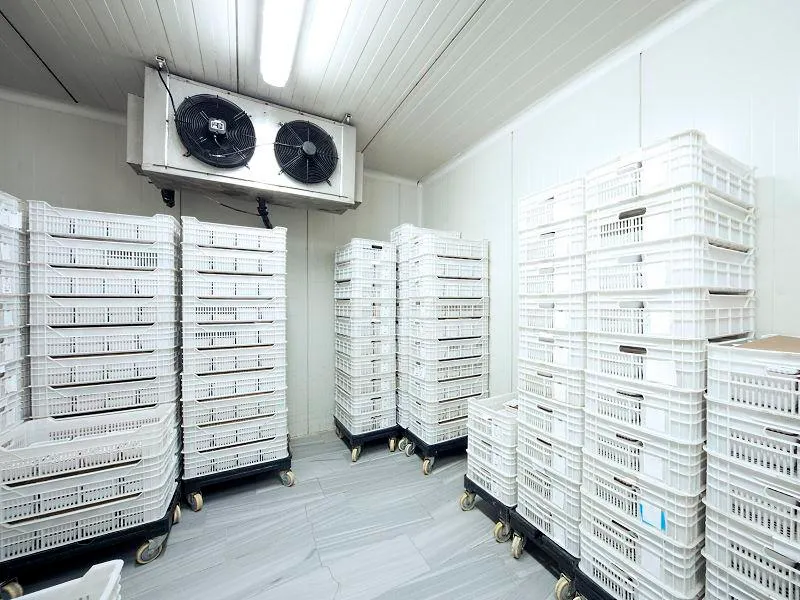
Thawing rooms
Frozen food is placed in a temperature-controlled room, usually at around 5 °C, where circulating air gradually warms it. The method is simple and has low operating costs, but thawing can take up to 48 hours. Thawing is uneven, which brings microbiological risks and significant losses of water and protein (drip loss) that reduce product quality.
Cold water thawing
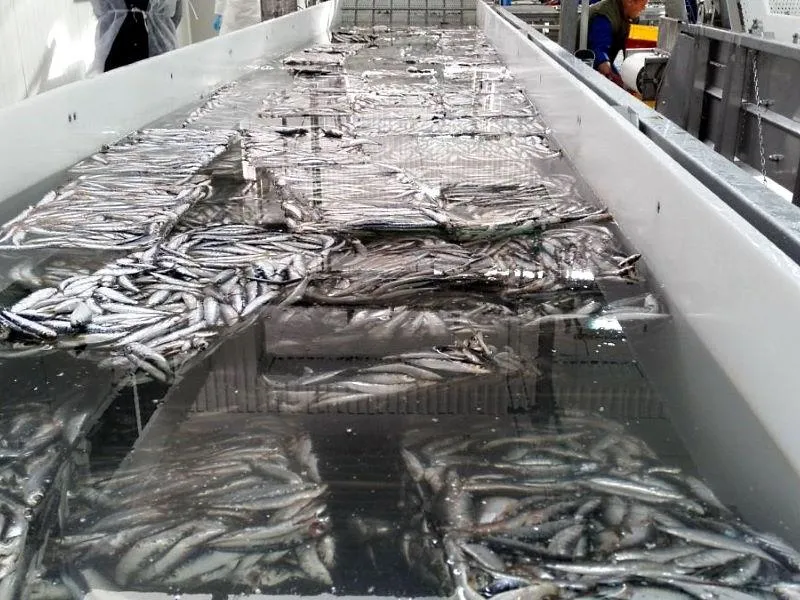
Faster than a room: food is immersed in cold water. It must be hermetically packed to avoid contamination. The method suits smaller cuts of meat and whole fish, but the water must be changed regularly to keep a safe temperature and prevent bacterial growth.
Tumble thawing
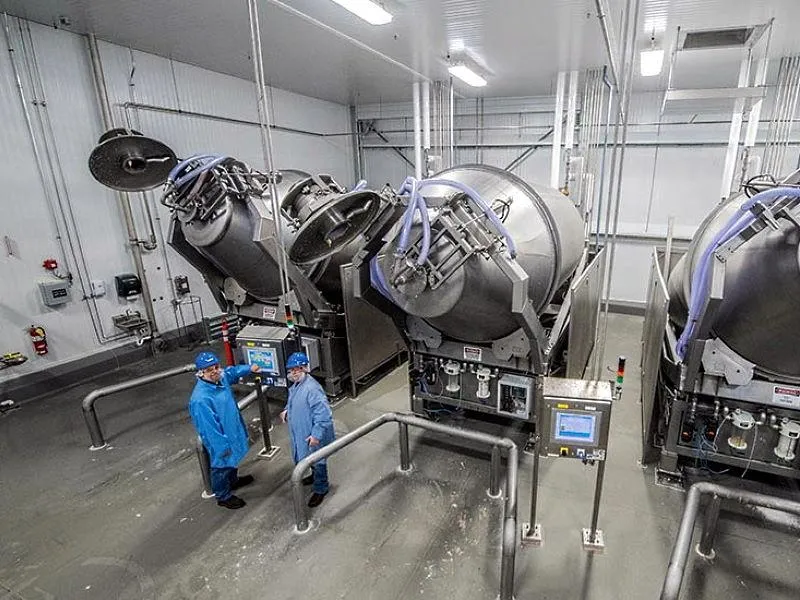
A rotating drum with slightly heated walls, sometimes with vacuum and cold steam. Thawing takes only a few hours. However, it is a batch process, which limits its use for large volumes, and it is unsuitable for delicate products such as fruit and vegetables because it can damage their structure.
Thawing in open air
A traditional method that is banned in many countries because of the high risk of microbial contamination. The surface of the food reaches temperatures at which bacteria multiply, and large amounts of water are lost.
Microwave tempering
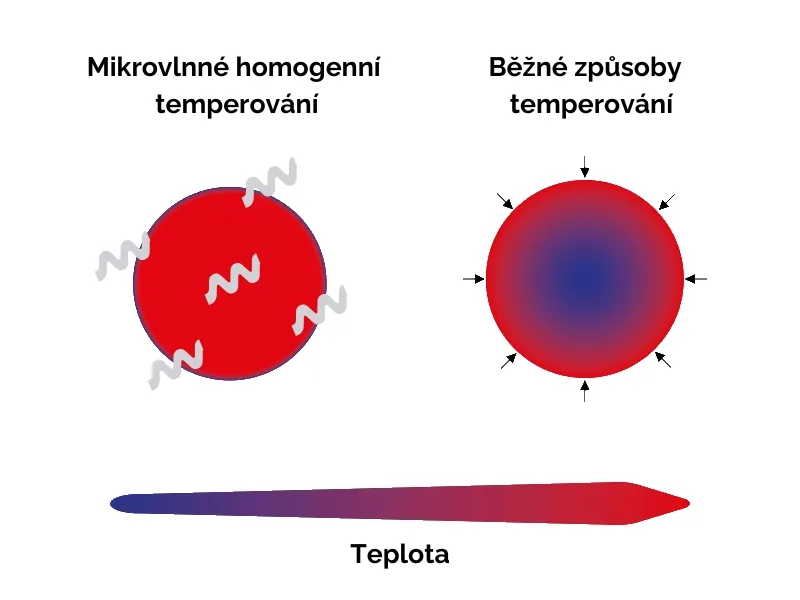
Microwaves penetrate the entire volume of the food and raise its temperature evenly throughout. Losses of water and protein are minimal and bacteria have no time to multiply. Thawing takes 3 to 20 minutes, even for large blocks. The method is also suitable for delicate products such as fruit and vegetables.
Why microwave tempering
- Production speed: a block from −20 °C to −2 °C in minutes, not hours. Production can run to current orders.
- Quality: products lose neither water nor protein and keep their natural quality.
- Space saving: no need for large thawing rooms; the space can be used to expand production.
- Safety: with fast tempering, bacteria have no time to multiply.
- Lower energy costs: a microwave system heats only the product, not the air in an entire room.